
A Performer Cannot Simply Walk Away
The Robot Who Looked Like MeThis thematic thread examines whether a role can be discarded after it has shaped a person’s habits, friendships, and obligations.
increasing Bearing strength in each event
 decreasing
Bearing strength in each eventdecreasingThe Western as a Real Place
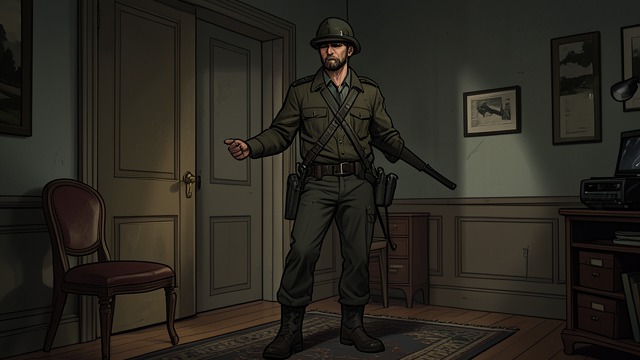
A Boundary Between Worlds
Contrived geography
The Set separates modern America from a vast landscape staged for the Western. Hidden cameras and microphones make the territory both a place to inhabit and an image to produce.
The actor crosses in character
Washburn enters dressed and armed as the gunman viewers know. The threshold suggests that performance begins before the first scripted exchange, because there is no script to rely on.
Values Written into the Part
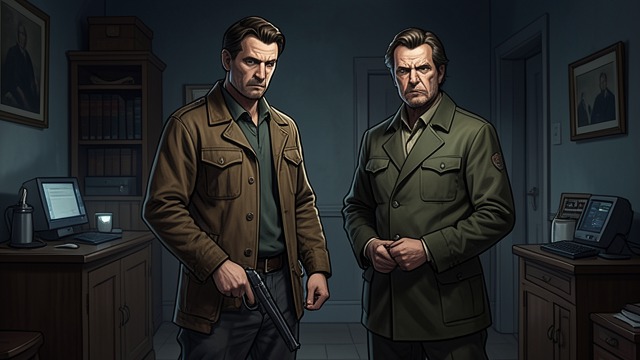
Acting Becomes Living
Parker’s claim
Parker tells Washburn that the men do not merely act their parts; they live them and stake their lives on them. He treats the role’s code as a genuine ethical obligation.
Washburn’s counterclaim
Washburn insists that the values were supplied with the role and can be left behind. Their argument refuses an easy distinction between theatrical convention and lived identity.
No Rules Beyond the Performance
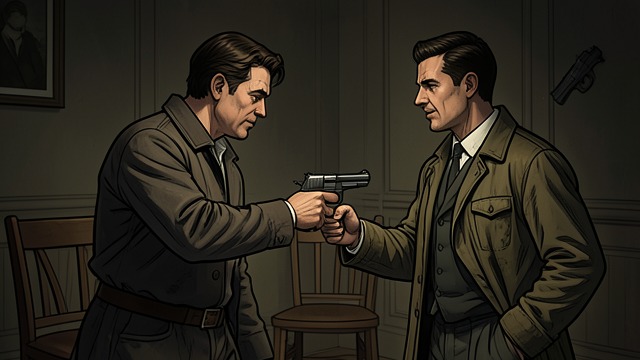
Violence Without a Safety Net
The role’s apparent rules
Washburn mocks Parker’s belief in special rules and reminds him that a fight has consequences. He does not treat the set as a harmless performance when a weapon is aimed at him.
A question of responsibility
The performers inhabit a fictional world in which violence is real. The story asks whether choosing to enter that world makes its values binding or simply makes its dangers unavoidable.
The Bridge Between Worlds
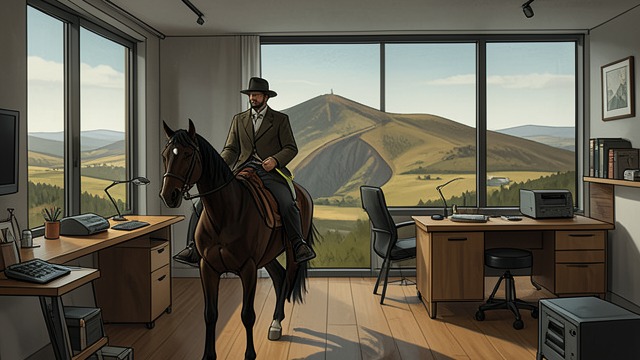
Departure Becomes a Choice
A literal exit
Devil’s Highway leads beyond the set and into another time. Washburn rides to its crest after giving up the derby.
Turning back
His return transforms the threshold from a route of escape into a moment of decision. He is neither fully outside the role nor simply carried along by it.
The Viewer Turns Off the Screen
The Performance Ends for Someone
Death becomes an image
Washburn’s perception fragments as the bullets strike, and the story presents his death as a damaged picture-making machine. His inner experience and the screen’s spectacle collapse together.
The audience’s ordinary gesture
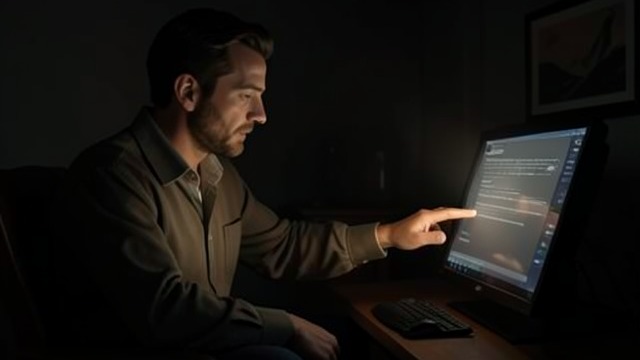
A viewer sits with the darkness, then reaches out and switches off the screen. The contrast makes the Western’s real danger part of a consumable performance.
As Washburn enters through the station
During Parker’s argument at the ranch
After Washburn knocks Parker down
When Washburn reaches Devil’s Highway
Immediately after Washburn’s death
